Prime Meal – A Budget-Friendly, Time-Saving, and Health-Conscious Meal Creation Tool


Category:
Client:
Duration:
Case Study: Prime Meal – A Budget-Friendly, Time-Saving, and Health-Conscious Meal Creation Tool
1. Introduction
Title: Prime Meal – A Budget-Friendly, Time-Saving, and Health-Conscious Meal Creation Tool
Role: UX Designer and Researcher
Year: 2022
2. Project Overview
Objective:
The goal of the Prime Meal project was to create a tool that helps users plan and create budget-friendly, time-saving, and health-conscious meals. This tool was designed to address the common challenges faced by individuals, especially college students, in maintaining a healthy diet amidst busy schedules and tight budgets.
Technologies Used:
User research tools (surveys, Google Forms), design tools (Miro, wireframing and prototyping software), and collaboration tools.
Collaborators:
Angeline Neo, Kiara Chacon, Mehdi Saraeian, and Yashwanth Maddipatla
3. My Approach: Crafting Digital Excellence
Vision and Innovation:
My vision for this project was to develop an intuitive and effective meal planning tool that leverages user research and design thinking to address the specific needs of budget-conscious and health-focused individuals. By integrating usability testing and iterative design, I aimed to create a tool that simplifies meal planning and promotes healthy eating habits.
Identifying Unique Challenges:
Before starting the project, I identified several unique challenges, including understanding the diverse dietary needs and constraints of users, designing an intuitive user interface, and ensuring that the tool provides practical and actionable meal planning solutions.
Resolving Complex Problems:
One of the primary challenges was designing a user-friendly interface that accommodates various dietary restrictions and preferences. To address this, I focused on creating flexible filtering options and customizable meal plans. Additionally, I worked on integrating features that provide nutritional information and cooking tips, ensuring the tool was both informative and easy to use.
User-Centric Design:
The cornerstone of my approach was ensuring that the design process was user-centric, focusing on the needs and preferences of the target audience. This involved conducting extensive user research, creating personas, and continuously testing and refining the design based on user feedback.
Meeting User Needs:
The design of Prime Meal aimed to meet the needs of users seeking affordable, quick, and healthy meal options. By focusing on user needs, we created a tool that was not only practical and functional but also engaging and easy to navigate.
Every aspect of this project is a testament to my systematic, innovative, and problem-solving approach. The meal planning tool reflects my vision for digital excellence and my commitment to delivering results that surpass expectations. Explore this project in my portfolio to witness how I translated my approach into an impactful, user-centered solution.
4. Project Details
Market Research and User Insights:
Description:
We conducted market research and user surveys to understand the eating habits, preferences, and challenges of our target audience. The research highlighted the need for a tool that simplifies meal planning, accommodates dietary restrictions, and provides budget-friendly options.
Visuals:
Include screenshots or images of the market research and survey results.
Example:
Personas:
Description:
Based on the research, we created detailed personas representing typical users. These personas helped guide the design process, ensuring that the tool addressed the specific needs and pain points of our target audience.
Visuals:
Show examples of the personas created.
Example:
Ideation and Prototyping:
Description:
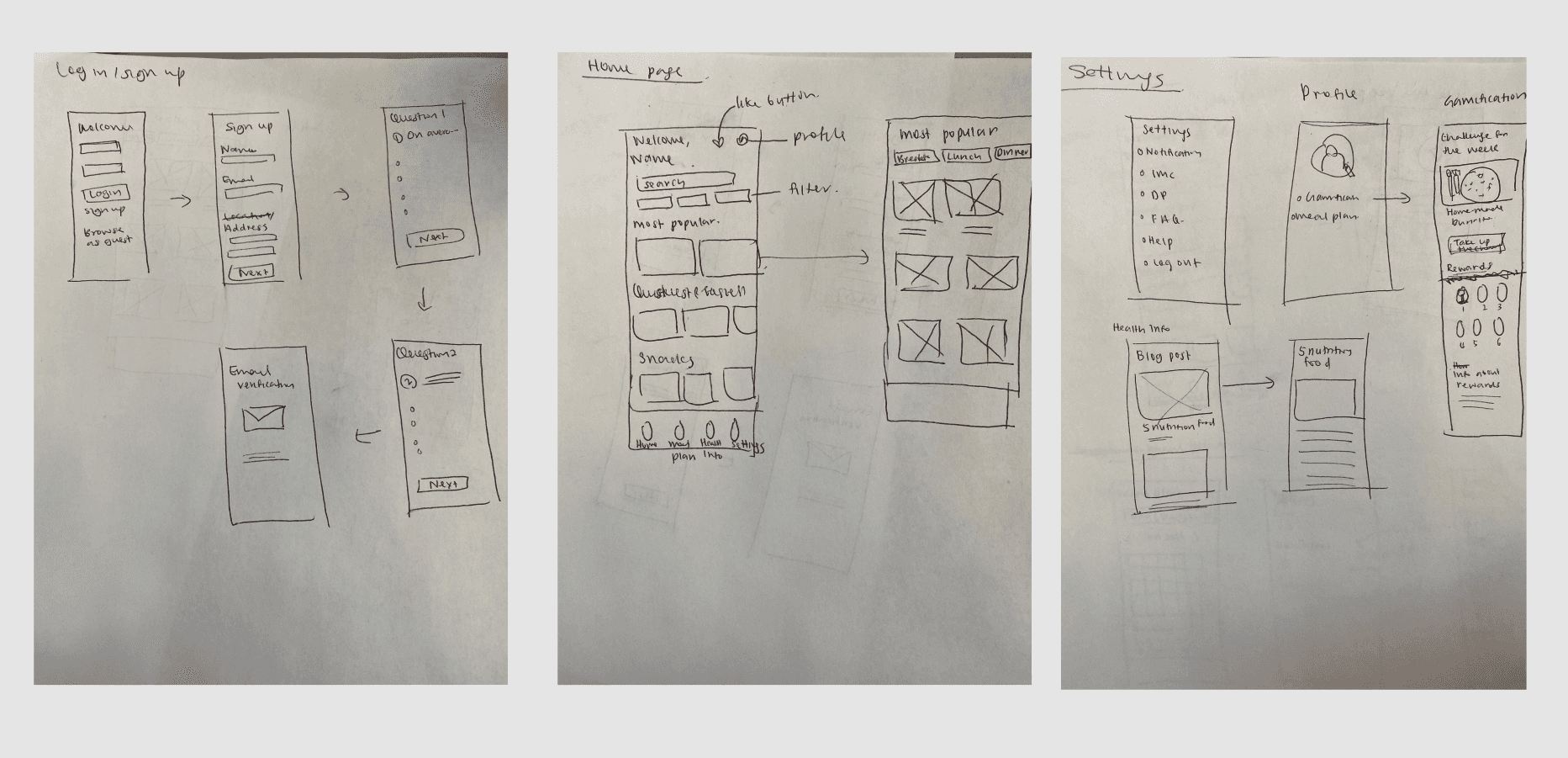
The ideation phase involved brainstorming and generating ideas, creating user flows, and developing low-fidelity wireframes. We then moved on to creating medium and high-fidelity prototypes, incorporating feedback from usability tests.
Visuals:
Provide examples of the wireframes and prototypes developed.
Example:
User Testing:
Description:
We conducted multiple rounds of user testing with friends and mentors to gather feedback on the prototype. The testing sessions focused on evaluating the usability, functionality, and overall user experience of the tool.
Visuals:
Include screenshots or images of the user testing sessions and feedback.
Example:
5. Responsibilities
UX Design:
As a UX designer, I was responsible for conducting user research, creating personas, developing wireframes and prototypes, and conducting usability tests. I focused on ensuring that the design was user-friendly, intuitive, and aligned with the needs of our target audience.
Research and Analysis:
I conducted market research, designed surveys, and analyzed user feedback to inform the design process. This involved creating and administering surveys, compiling and analyzing data, and identifying key insights and opportunities for improvement.
6. Project Highlights
User-Centric Design:
The project successfully created a user-centric meal planning tool that addressed the specific needs and preferences of budget-conscious and health-focused individuals.
Comprehensive Features:
The tool included various features such as dietary filters, customizable meal plans, nutritional information, and cooking tips, providing users with a comprehensive meal planning solution.
Positive Feedback:
User testing sessions received positive feedback, with users appreciating the tool’s ease of use, various filter options, and the ability to plan meals daily, weekly, or monthly.
7. Conclusion
Results:
Prime Meal demonstrated the potential to simplify meal planning and promote healthy eating habits. The project highlighted the importance of user-centric design and iterative development in creating effective and engaging solutions.
Learnings:
Through this project, I gained valuable insights into conducting user research, developing user-friendly interfaces, and the importance of continuous testing and iteration.
Future Enhancements:
Potential future enhancements include integrating social media features, expanding the range of dietary filters, and further refining the user interface based on additional user feedback.


